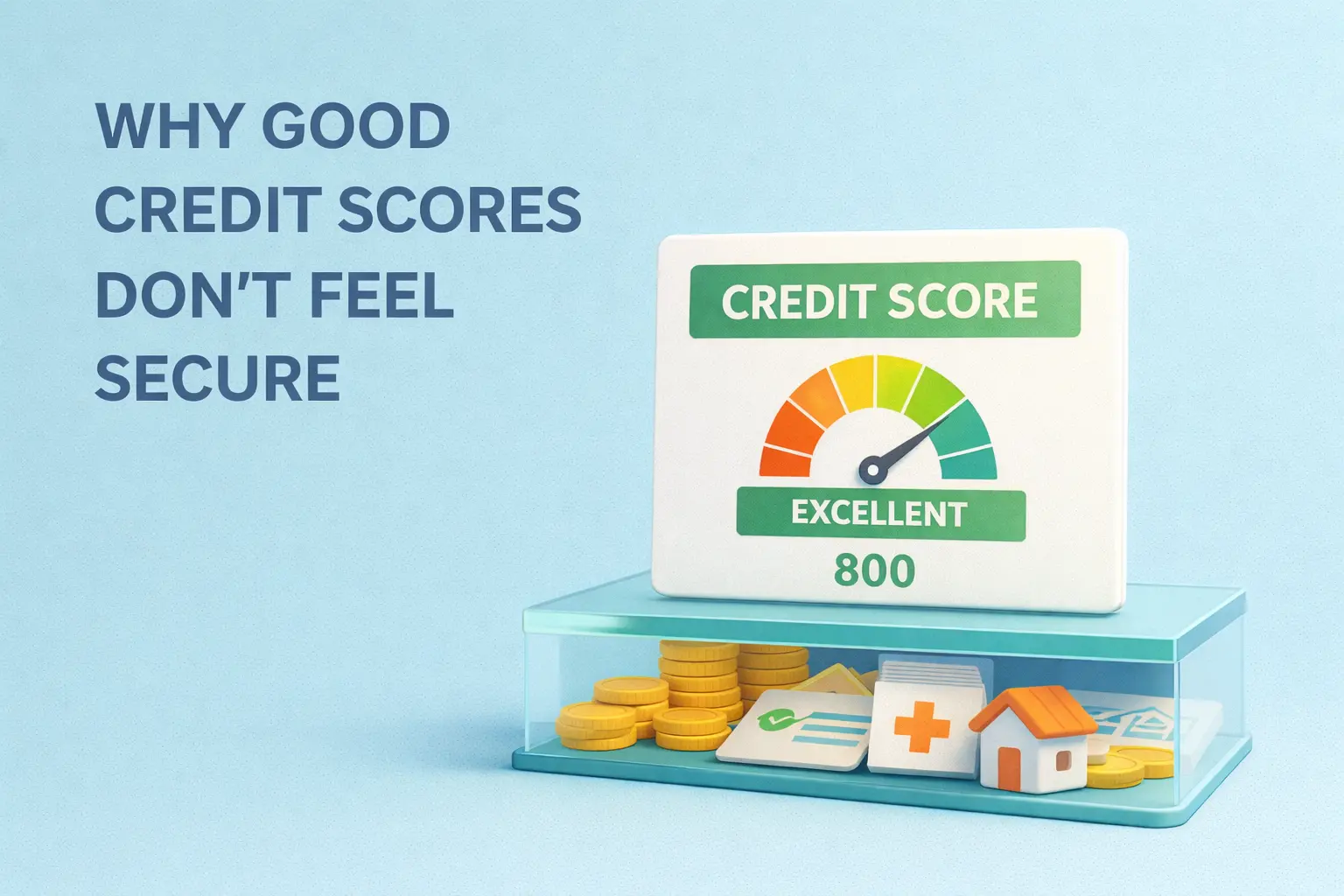
In Malaysia, a good credit score is often treated as a financial milestone. Once you reach it, you’re told you’ve done things “right”. Banks approve your loans, credit card limits increase, and financing becomes easier. Yet many Malaysians with strong credit scores still feel uneasy about money, even after years of disciplined repayments.
That’s because a credit score measures how well you repay debt, not how safe your life feels.
What a “Good Credit Score” Actually Means in Malaysia
A good credit score usually means:
- You pay your car loan, home loan, and credit cards on time
- You don’t miss instalments or default
- Your CCRIS report looks clean to banks
But it does not mean:
- You have 6 months of emergency savings
- Your monthly cash flow has breathing room
- You can survive a job change without panic
- Your lifestyle is sustainable if costs rise
You can be creditworthy and still be financially fragile.
Why Approval Feels Like Progress (But Isn’t)
Many Malaysians feel more secure the moment a bank says “approved”. This is where the illusion starts.
Approval usually means:
- Your Debt Service Ratio fits Bank Negara rules
- Your current income can service today’s instalments
It does not mean:
- You can handle rising medical insurance premiums
- You are prepared for childcare or parents’ medical costs
- Your future lifestyle changes were considered
Approval increases access to debt.
It does not increase safety.
The Part Banks Don’t Care About (But You Should)
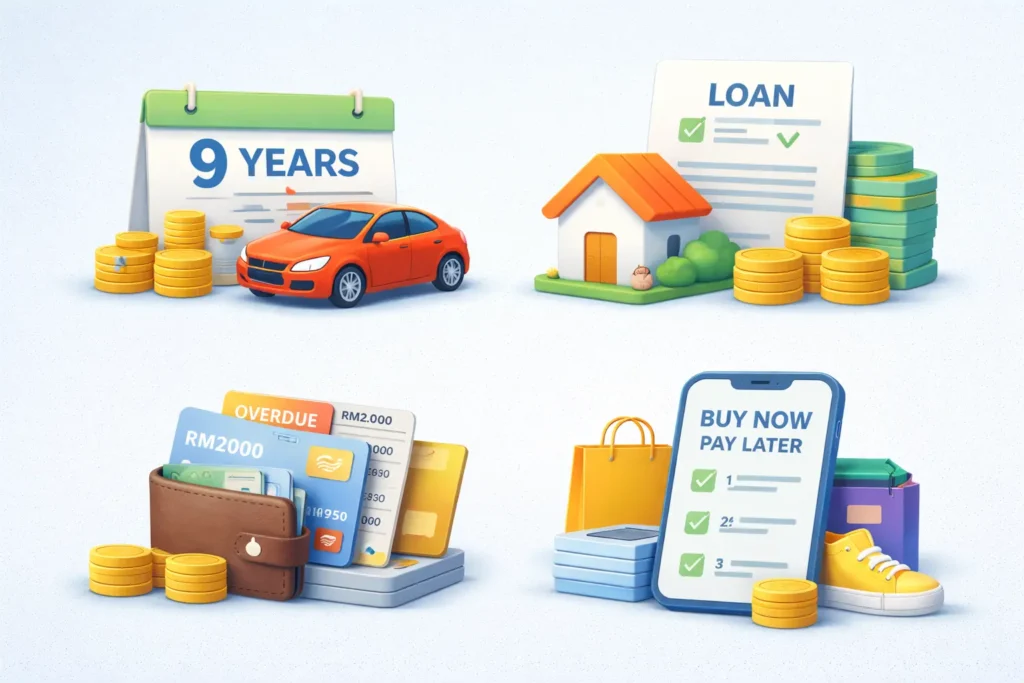
Credit scoring systems in Malaysia reward discipline, not margin.
You can have:
- A 9-year car loan (very normal in Malaysia)
- A home loan or high rent
- Credit cards that are never fully cleared
- Buy Now Pay Later instalments
…and still maintain an excellent score as long as payments are on time.
What the system ignores:
- How much cash is left after commitments
- Whether one medical bill breaks your finances
- Whether your “affordable” instalments leave you stuck
This is why many Malaysians feel anxious even with good scores. Everything works — until it doesn’t.
Why This Feels Worse in 2026
In 2026, commitments are heavier and longer-term than before. For many households, monthly obligations now include:
- Long-tenure car loans
- Housing instalments or rising rent
- Medical insurance premiums that increase yearly
- Subscriptions and lifestyle costs that feel “small” but add up
- Credit card balances that quietly roll over
None of these hurt your credit score if paid on time.
All of them reduce flexibility.
Your credit profile looks strong.
Your margin keeps shrinking.
What Financial Security Actually Looks Like (But Isn’t Measured)
Real financial security is boring and invisible to credit systems.
It looks like:
- Money left over every month after all commitments
- Emergency savings that buy time, not just comfort
- Debt levels that allow options, not just approval
- The ability to say no to borrowing without fear
When these exist, credit becomes a tool.
When they don’t, credit becomes a trap, even with a perfect score.
Final Truth Most People Won’t Say
A good credit score means banks trust you.
It doesn’t mean your life feels secure.
Many Malaysians aren’t irresponsible. They’re just optimising for approval instead of margin, because the system teaches them to.
Credit helps you borrow.
Margin helps you sleep.
Keep Reading
If you found this guide useful, here are more RinggitWise investment reads to help you grow smarter in 2025:
- The Ultimate ETF Investment Guide for Malaysians (2025 Edition)
Learn how to build a diversified portfolio with ETFs — and why they’re outperforming unit trusts in 2025. - Renting vs Buying in Malaysia (2025): How to Avoid the 30-Year Money Trap
Should you buy or rent? This breakdown shows which option actually makes financial sense for Malaysians today. - REIT Malaysia 2025: How to Invest in Real Estate Without Owning Property
Real estate investing doesn’t need millions. Here’s how REITs let you earn passive property income with as little as RM100.