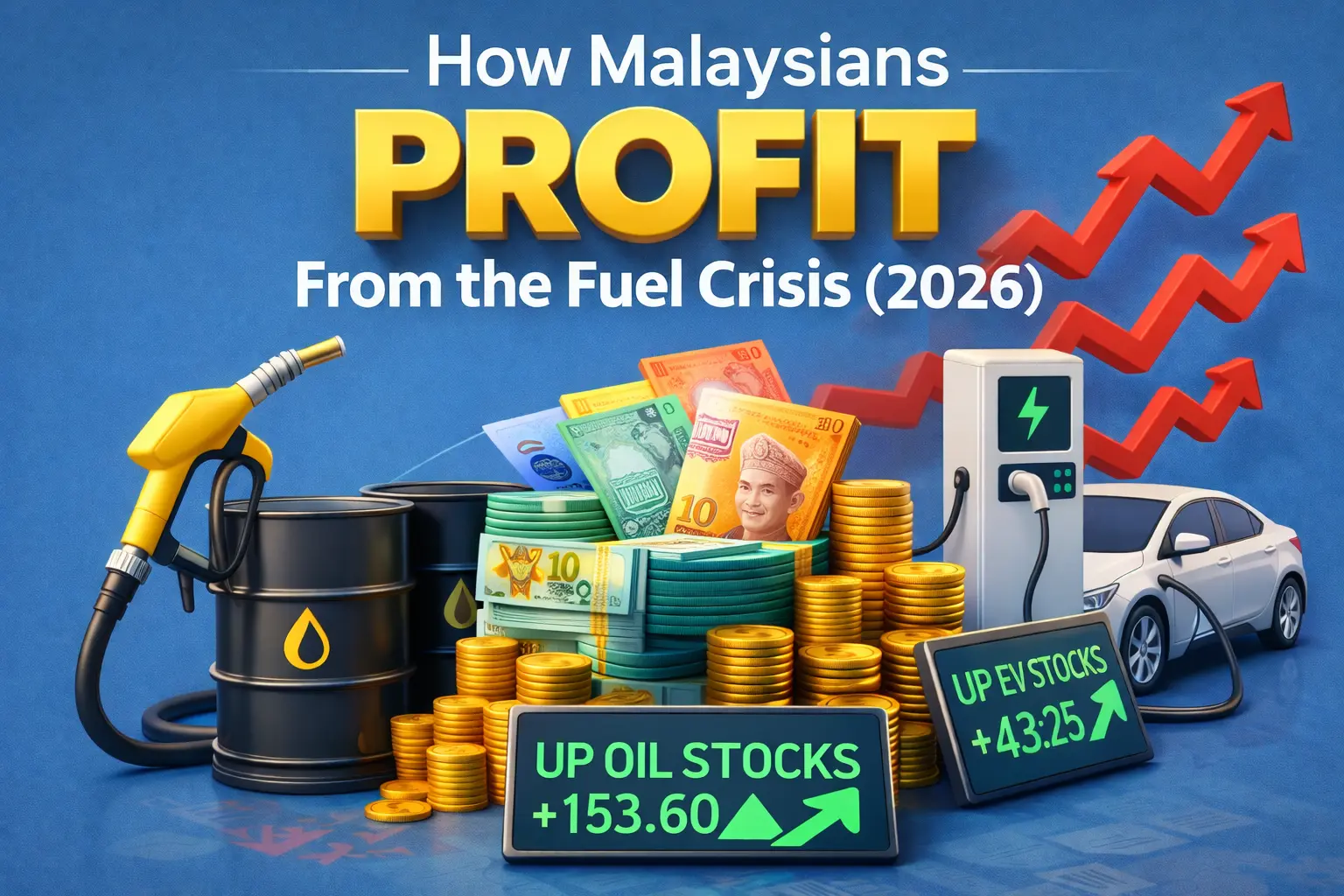
Most Malaysians see the fuel crisis as a problem.
Higher petrol costs. More expensive food. Rising delivery fees.
And they’re right.
But here’s the part nobody talks about:
While most people are paying more, a small group is quietly making money.
Not by luck. But because they’re positioned differently.
1. Logistics Companies (The Silent Price Pass-Through)
When fuel prices rise, logistics costs go up.
But here’s what actually happens:
They pass it on.
- Delivery fees increase
- Transport surcharges are added
- Businesses absorb and then charge consumers
Companies don’t lose. Consumers do.
That’s why:
- Courier fees rise
- Food delivery becomes more expensive
- Retail prices creep up
What this means:
Logistics companies often maintain margins even during fuel spikes.
Some even benefit from:
- Increased demand (e-commerce, deliveries)
- Higher pricing power
2. Oil & Gas Stocks (The Obvious Winner Most Ignore)
When fuel prices rise globally, energy companies benefit.
This includes:
- Upstream (exploration & production)
- Midstream (transport & storage)
- Downstream (refining, distribution)
In Malaysia, oil-linked companies often see:
- Higher revenue
- Improved margins (depending on structure)
- Stronger investor interest
The irony: Many Malaysians complain about petrol prices, but never look at the companies profiting from it.
3. The EV Shift (Not Immediate, But Inevitable)
Fuel pressure changes behaviour. Not overnight, but gradually.
As petrol becomes more expensive:
- EV interest increases
- Charging infrastructure expands
- Government incentives gain traction
This creates opportunity in:
- EV-related companies
- Charging networks
- Energy infrastructure
Reality check: EV adoption in Malaysia is still early. But fuel pressure accelerates the shift.
4. Energy & Utility Players
When energy becomes a national concern, certain sectors gain importance:
- Power generation
- Renewable energy
- Infrastructure providers
Why?
Because energy security becomes priority.
Governments and businesses start investing more heavily in:
- Efficiency
- Alternative sources
- Grid stability
This creates long-term structural winners.
5. The Real Winner: People Who Adjust Early
This is the part most people miss. The biggest winners are not companies. It’s individuals who adapt faster than others.
While most people:
- Complain about petrol
- Spend the same way
- Absorb rising costs
A small group:
- Reduce unnecessary travel
- Optimise spending
- Shift into assets that benefit
- Adjust lifestyle early
That’s the real edge.
6. What This Means for You
You don’t need to “profit from crisis.” But you shouldn’t ignore it either.
Simple actions:
- Track how fuel impacts your monthly spending
- Reduce low-value trips
- Optimise transport habits
- Be aware of sectors that benefit
Because even if you don’t invest directly, you’re already paying for the fuel crisis.
Final Thoughts
The fuel crisis is not equal. Some people pay more. Some businesses adjust. Some sectors benefit.
Most Malaysians only see the cost. Very few see the shift happening underneath.
And in every economic shift:
There are always two groups. Those who react late. And those who position early.
Read More
If you want to better understand how to protect your money during rising costs and economic shifts:
The Ultimate Post-Raya Reset Plan If You Feel Broke
A practical step-by-step guide to recover your finances, fix your cashflow, and rebuild savings after overspending.
The Truth About Financial Freedom in Malaysia
What financial freedom actually means in Malaysia — and why most people misunderstand how to achieve it.