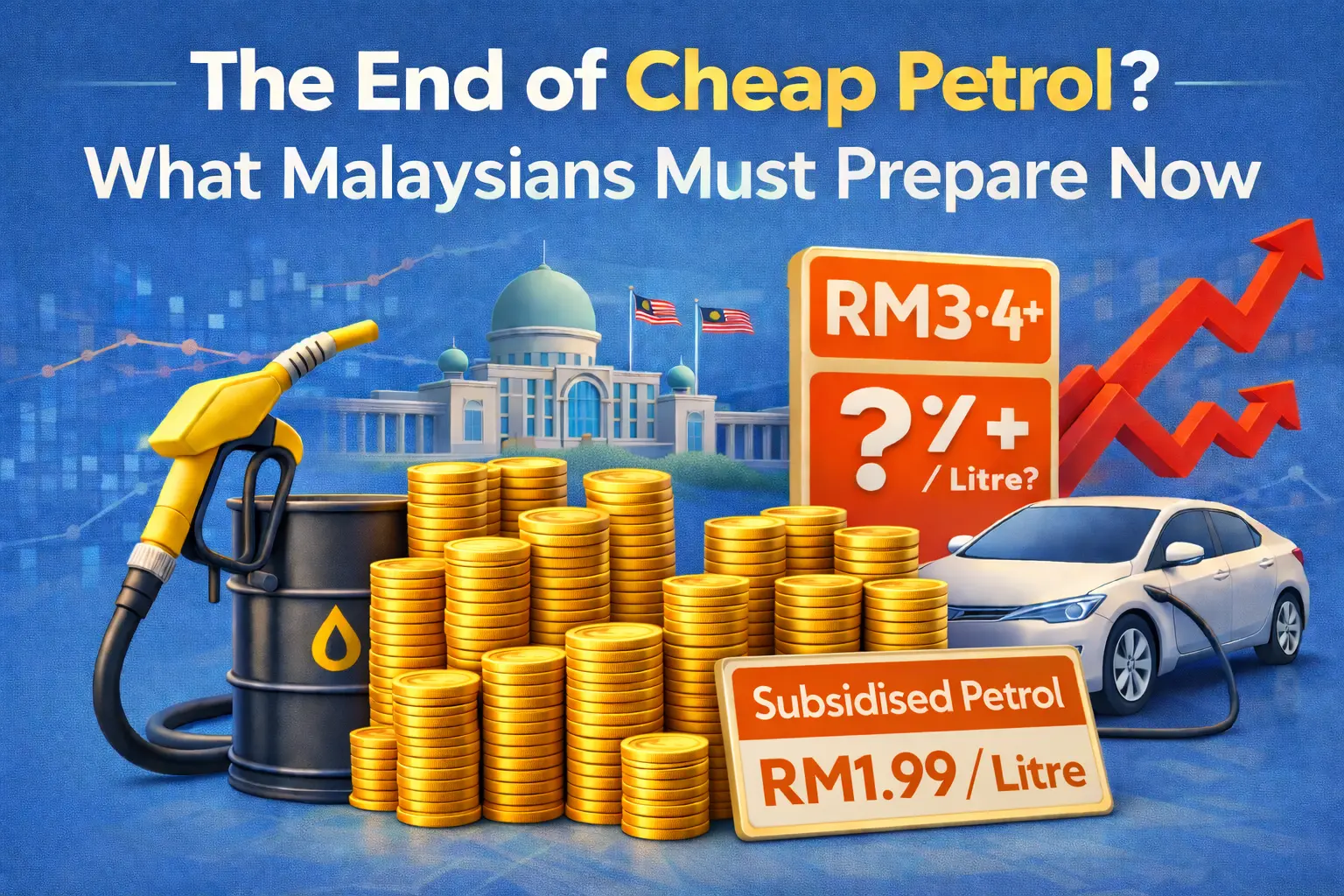
Petrol in Malaysia still feels “cheap.” At least compared to many other countries.
But that affordability doesn’t come naturally. It’s supported. And that support is getting harder to maintain.
1. The Truth About Malaysia’s Fuel Subsidy
Malaysia has long used fuel subsidies to keep petrol prices stable.
It works like this:
- Government absorbs part of the real fuel cost
- Consumers pay a lower, controlled price
This keeps daily life affordable.
But it comes with a cost.
A big one.
2. Why Subsidies Are Becoming Harder to Sustain
Fuel subsidies are not small. They cost the government billions every year.
As global oil prices fluctuate and demand increases:
- Subsidy costs rise
- Government spending pressure increases
- Budget deficits become harder to control
At the same time, Malaysia needs to fund:
- Healthcare
- Infrastructure
- Education
- Public services
Something has to give.
3. The Direction Policy Is Moving
The shift has already started.
Instead of blanket subsidies for everyone:
The government is gradually moving toward targeted subsidies
Meaning:
- Lower-income groups continue receiving support
- Higher-income groups may pay closer to market prices
This reduces fiscal burden. But it changes the game for many Malaysians.
4. What Happens If Subsidies Reduce
If subsidies are reduced or restructured, expect:
1. Petrol prices become more volatile
Closer to global oil prices
2. Cost of living increases
Transport → logistics → food → services
3. Daily spending patterns change
More awareness of fuel usage
4. Pressure on middle-income households
Not subsidised enough, not high-income enough This is where most impact will be felt.
5. The Ripple Effect Most People Ignore
Fuel doesn’t just affect your car.
It affects:
- Food prices (transport cost)
- Grab / delivery fees
- Business operating costs
- Inflation overall
Even if you don’t drive much, you’re still paying for it.
6. Who Gets Hit the Hardest
Not the richest. Not the lowest-income (if protected by targeted subsidies). It’s the middle group.
- Commuting daily
- Supporting families
- Managing fixed expenses
They absorb the transition.
7. What Malaysians Should Start Doing Now
You don’t need to panic. But you do need to prepare.
1. Track Your Fuel-Related Spending
Most people underestimate:
- Petrol
- Toll
- Car maintenance
These add up quickly.
2. Reduce Low-Value Travel
Not every trip is necessary.
Small adjustments:
- Combine errands
- Plan routes
- Avoid unnecessary drives
3. Build Buffer Into Your Budget
Assume costs will rise slightly.
Add a margin:
- RM100-RM300/month buffer
This prevents shock.
4. Rethink Long-Term Transport Choices
Not urgent.
But worth considering:
- Fuel efficiency
- Location (distance to work)
- Future alternatives
8. This Is Not About Panic, It’s About Adjustment
Malaysia is not “removing subsidies overnight.”
But the direction is clear:
-More targeted
-More efficient
-Less blanket support
The earlier you adjust, the easier it becomes.
Final Thoughts
Cheap petrol is not guaranteed.
It’s supported by policy, and policy changes over time.
Most Malaysians will only react when prices move.
A smaller group prepares before it happens.
And that difference determines who feels the pressure, and who adapts early.
Read More
If you want to stay ahead of rising costs and build stronger financial control:
The Ultimate Post-Raya Reset Plan If You Feel Broke
A practical system to fix your cashflow and rebuild your finances quickly.
The Truth About Financial Freedom in Malaysia
What financial freedom actually means, and why most Malaysians misunderstand it.