Malaysia’s property market is changing fast. While traditional condos struggle with oversupply and flat rental yields, a new trend is quietly growing: co-living and micro apartment investments.
These aren’t Airbnb clones or hostel rebrands. They’re structured, data-backed property models that focus on flexible living, higher yield, and lower entry cost.
And if you’ve ever wondered how investors are still earning 7-12% ROI while most landlords barely break even, this is how they’re doing it.
1. Why Co-Living Took Off in Malaysia
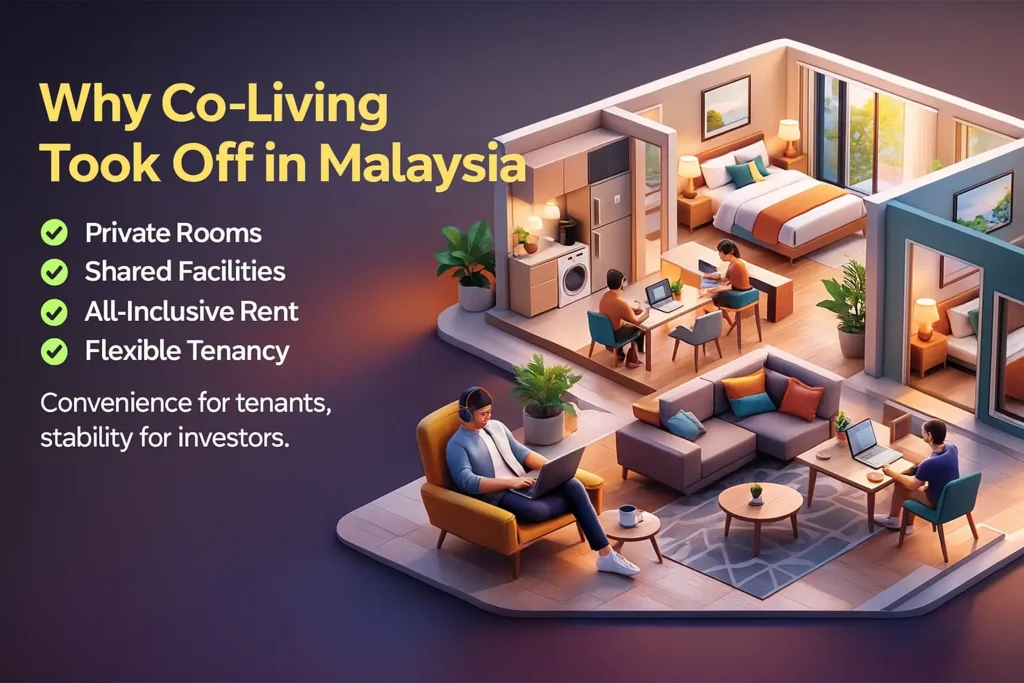
The pandemic reshaped how Malaysians live and work. Remote jobs, rising rents, and lifestyle flexibility created a huge demand for fully furnished, short-term, and community-based rentals.
According to data from HOMA, Utopia, and KipleLiving, occupancy rates in key city areas (Kuala Lumpur, Petaling Jaya, Penang) have crossed 80%, compared to traditional apartments averaging 60–70%.
Co-living offers:
- Private rooms with shared facilities (kitchen, laundry, workspace)
- All-inclusive rent (Wi-Fi, utilities, cleaning)
- Flexible tenancy (1–6 months)
- Community vibe for young professionals and digital nomads
For tenants, it’s convenience.
For investors, it’s stability and better yields.
2. How Investors Make Money from Co-Living
There are two main ways Malaysians invest in this trend:
A. Rental Arbitrage (Zero Ownership Model)
You rent a whole unit from a landlord, refurbish it into multiple rooms, and sublet each room for profit.
Example:
- You rent a 3-bedroom condo in Bangsar for RM2,500/month.
- You furnish and rent out each room for RM1,200.
- Total rental collected: RM3,600.
- Monthly profit (after utilities/cleaning): ~RM800-RM1,000.
Low capital entry
Requires landlord approval and proper tenancy terms
B. Fractional Co-Living Ownership (Equity Model)
PropTech startups like HOMA, Utopia, and KipleLiving now allow investors to buy fractional shares or full units in managed co-living spaces.
These companies handle everything from furnishing, marketing, tenant turnover, and maintenance, while investors receive monthly rental returns.
Reported ROI: 7–12% annually, depending on occupancy and location.
Platforms often structure deals as:
- Revenue share (after management fee)
- Quarterly or annual payouts
- Legal ownership via co-op or SPV (special purpose vehicle)
3. Where Co-Living Works Best in Malaysia
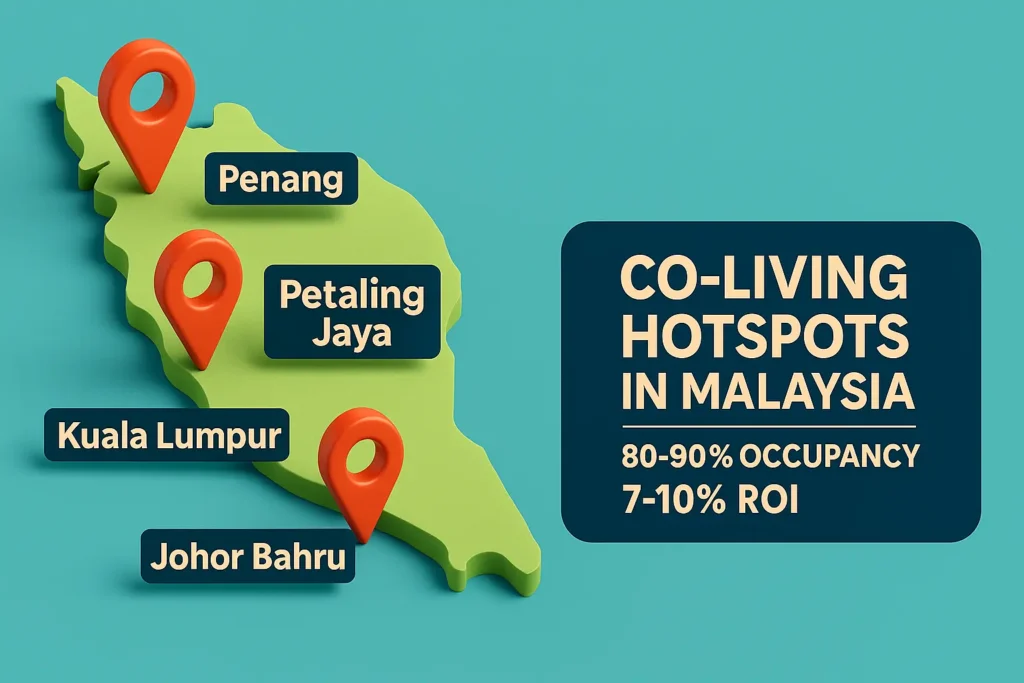
Not every location is profitable. The best-performing co-living zones are:
- Kuala Lumpur City Centre & Bangsar: Expat professionals, remote workers.
- Petaling Jaya & Subang Jaya: Students, interns, hybrid workers.
- Penang (George Town): Digital nomads, creative freelancers.
- Johor Bahru: Singapore-based Malaysians seeking short stays.
Average occupancy: 80–90%
Average ROI: 7–10% (up to 12% in high-demand hubs)
4. Real Examples in Malaysia (2025)
| Brand | Business Model | Occupancy | Typical ROI | Key Areas |
|---|---|---|---|---|
| HOMA | Fractional & full ownership | 85% | 8–10% | KL, PJ |
| Utopia | Rental arbitrage & operator | 80% | 7–12% | PJ, Penang |
| KipleLiving | Institutional-backed co-living | 90% | 8–10% | KL, JB |
| Komune Living | Hotel-hybrid | 85% | ~8% | Bangsar South |
| The Hatchery | Boutique concept | 80% | ~7% | PJ, TTDI |
All report stable occupancy and recurring tenant flow driven by the post-pandemic shift to flexible, community-based urban living.
5. The Pros & Cons You Should Know
Pros
- Higher ROI than traditional rental (up to double)
- Consistent demand from young professionals
- Lower vacancy risk (shared-unit model)
- Fully managed options via PropTech operators
Cons
- Property wear and tear higher than long-term rentals
- Management fees can reach 20–25%
- Risk if operator fails to maintain quality or occupancy
- Regulatory ambiguity (some condos prohibit subletting)
Tip: Always check tenancy clauses or invest through operators with valid management licenses.
6. How to Start (Safely)
- Research Operators: Check platforms like HOMA, KipleLiving, or Utopia for investor packages.
- Start Small: Try one managed room or fractional share before scaling.
- Inspect Terms: Verify payout schedule, maintenance fees, and ownership structure.
- Check Reviews: Speak with existing investors in Facebook groups or Telegram communities.
- Stay Involved: Even with a managed operator, track occupancy and rental data.
7. Tax & Legal Considerations
Income from co-living rentals is treated as rental income under LHDN.
If structured through a company or SPV, it may qualify for business tax deductions (furnishing, utilities, management fees).
Always ensure the operator complies with:
- Tenancy regulations
- Building management rules
- Fire and safety codes
For fractional ownership, confirm:
- Registered under Companies Act or Co-operative Societies Act
- Transparent distribution statements and contracts
8. Final Thoughts
Co-living isn’t a trend, it’s a structural shift in how Malaysians live and invest.
For tenants, it offers flexibility.
For investors, it offers cash flow, diversification, and scalability.
Just like how REITs made property investing accessible to the masses, co-living models are now making high-yield real estate achievable for younger investors without needing millions.
But as with any investment, the operator matters more than the marketing.
Pick reputable partners, monitor your returns, and treat it like a business, not a side bet.
Keep Reading
If you found this guide useful, here are more RinggitWise investment reads to help you grow smarter in 2025:
- The Ultimate ETF Investment Guide for Malaysians (2025 Edition)
Learn how to build a diversified portfolio with ETFs — and why they’re outperforming unit trusts in 2025. - Renting vs Buying in Malaysia (2025): How to Avoid the 30-Year Money Trap
Should you buy or rent? This breakdown shows which option actually makes financial sense for Malaysians today. - REIT Malaysia 2025: How to Invest in Real Estate Without Owning Property
Real estate investing doesn’t need millions. Here’s how REITs let you earn passive property income with as little as RM100.