Most Malaysians treat EPF as something automatic.
Your employer deducts. You ignore it. You check once a year.
But here’s what most people don’t realise:
EPF is one of the most stable, government-backed compounding vehicles available to retail investors in Malaysia.
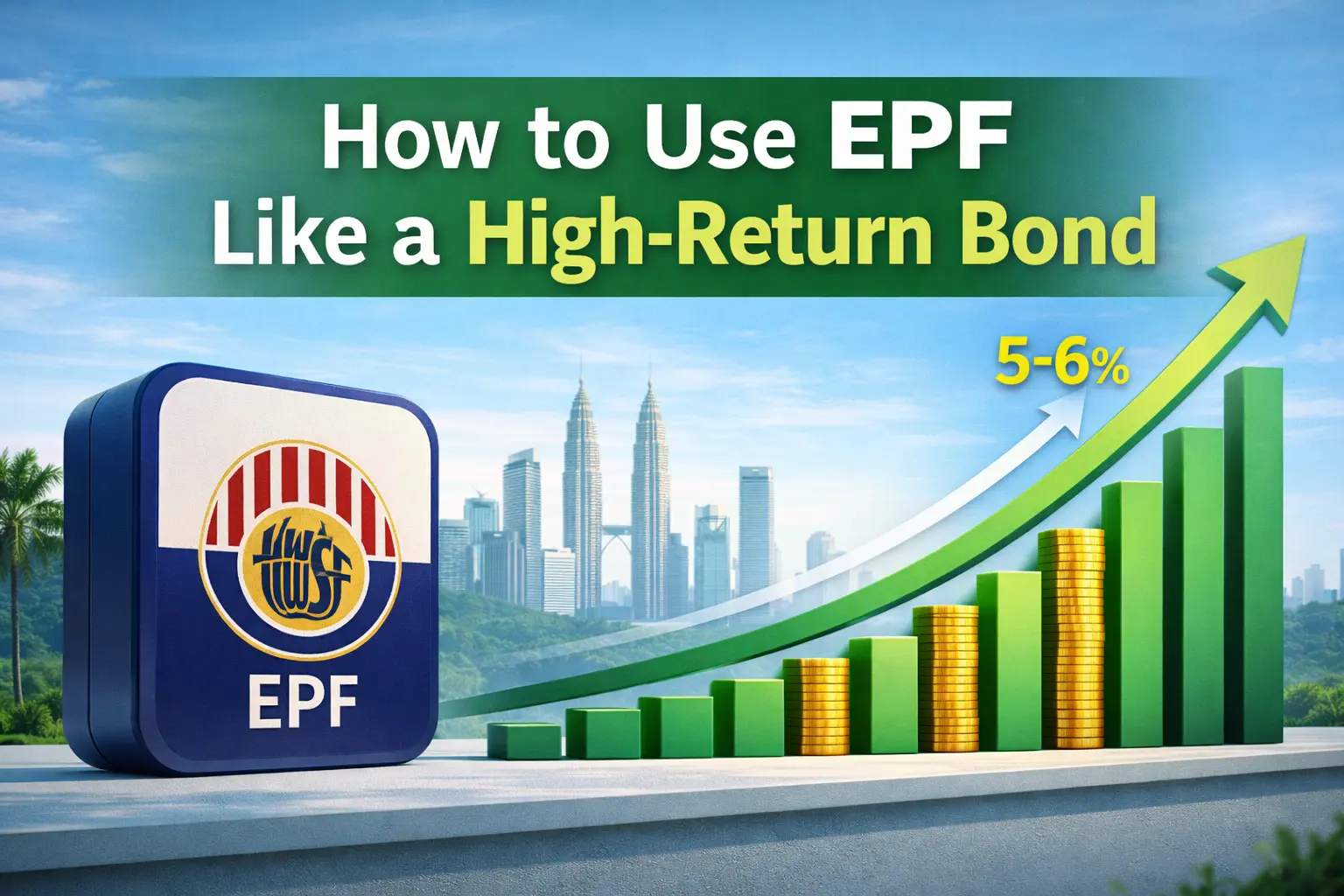
If used strategically, it can function like a high-return bond inside your portfolio. This is not about blind loyalty to EPF. It’s about understanding when it makes sense and when it doesn’t.
1. Why EPF Is Structurally Powerful
EPF (KWSP) invests across:
- Malaysian equities
- Global equities
- Bonds
- Real estate
- Infrastructure
Historically, conventional dividend rates have hovered around 5–6% annually over long periods.
That’s:
- Higher than most fixed deposits
- Lower volatility than direct stock investing
- Backed by institutional-scale asset allocation
For conservative capital, that matters.
2. When EPF Beats Other “Safe” Assets
Let’s compare.
| Asset | Typical Return | Risk | Liquidity |
|---|---|---|---|
| Fixed Deposit | 2–4% | Low | High |
| Money Market Fund | 3–4% | Low | High |
| EPF (long-term avg) | ~5–6% | Low-Moderate | Low |
| Industrial REIT | 5–7% | Moderate | Medium |
EPF sits in a strange middle zone:
- Not fully liquid
- Not fully market-driven
- But consistently compounding
That’s why you can treat it like a bond allocation in your personal asset mix.
3. The Self-Contribution Strategy (The Part Most Ignore)
Many Malaysians don’t realise:
You can voluntarily contribute more to EPF (up to the annual limit).
Why would you?
Because:
- You lock in disciplined compounding
- You reduce behavioural mistakes
- You potentially earn 5–6% without daily monitoring
This works especially well for:
- Freelancers
- Business owners
- High-income earners with excess cash
- People who panic-invest during market drops
Instead of chasing short-term trades, you redirect part of surplus income into EPF.
It becomes your “stable growth engine.”
4. Who This Strategy Is Best For
EPF self-contribution works best if you:
- Already have 6–12 months emergency fund
- Don’t need liquidity for 5–10 years
- Want predictable long-term compounding
- Have low tolerance for market swings
It is not ideal if:
- You need short-term access
- You are aggressively building a business
- You require high liquidity flexibility
Liquidity is the trade-off.
5. How to Think About It Strategically
Instead of asking:
“Should I invest in EPF?”
Ask:
“What percentage of my portfolio should behave like a bond?”
Example portfolio mindset:
- 40% growth (stocks / ETFs)
- 30% income (REITs / dividends)
- 20% EPF as bond equivalent
- 10% liquid cash
EPF becomes the stabiliser.
Not the entire plan.
6. The Compounding Effect Most Underestimate
If you voluntarily contribute RM10,000 yearly for 15 years at 5.5% average:
You’re not just adding RM150,000.
You’re compounding it.
The psychological benefit is huge:
- You don’t touch it
- You don’t trade it
- You don’t panic
Forced patience creates wealth.
7. The Risk You Must Accept
EPF is not risk-free.
- Dividend rate can fluctuate
- Policy changes can happen
- Liquidity is restricted
But compared to retail investing mistakes, it protects many Malaysians from themselves.
Final Thoughts
EPF is not exciting.
It doesn’t trend.
It doesn’t spike 20% in a month.
It doesn’t make headlines.
But in a portfolio built for 2026 and beyond, it can act like a stable compounding engine, similar to a high-quality bond fund.
Sometimes the most powerful investment isn’t new.
It’s simply misunderstood.
Read More
If you’re serious about strengthening your long-term financial position, these guides will help you go further:
How to Stop Being Broke in Malaysia: 9 Brutal Truths You’re Avoiding
If your salary keeps disappearing every month, this breakdown exposes the habits and financial blind spots that quietly keep many Malaysians stuck.
Most Malaysians Will Retire Broke: Why You Must Start Now (Free Checklist)
Retirement isn’t automatic. This guide explains the numbers, the risks, and the simple checklist you can use to avoid becoming part of Malaysia’s retirement crisis.