
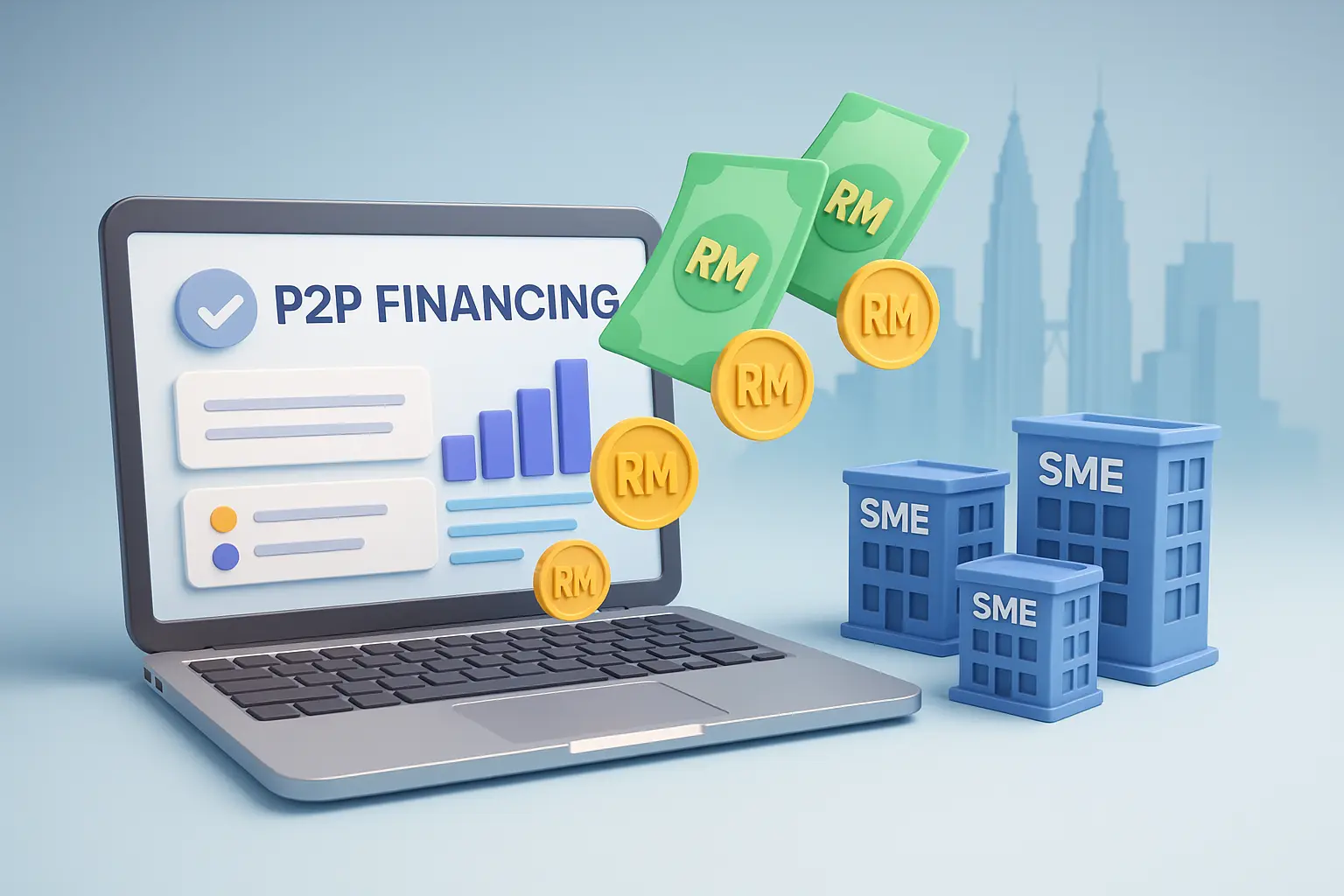
Most Malaysians still think “investing” means putting money in FDs, buying ASB units, or trying their luck with property. But quietly, another investment class has been growing under the radar, one that lets you earn 8–16% a year, legally, from your phone.
It’s called Peer-to-Peer (P2P) financing, and it’s one of the safest, most transparent alternative investments in Malaysia today because it is regulated directly by the Securities Commission (SC).
In simple terms, it lets you lend money to real Malaysian businesses and collect the interest the same way banks do.
If you’ve ever wanted predictable returns without the volatility of stocks or the huge capital of property, P2P financing should be on your radar.
What P2P Financing Actually Is
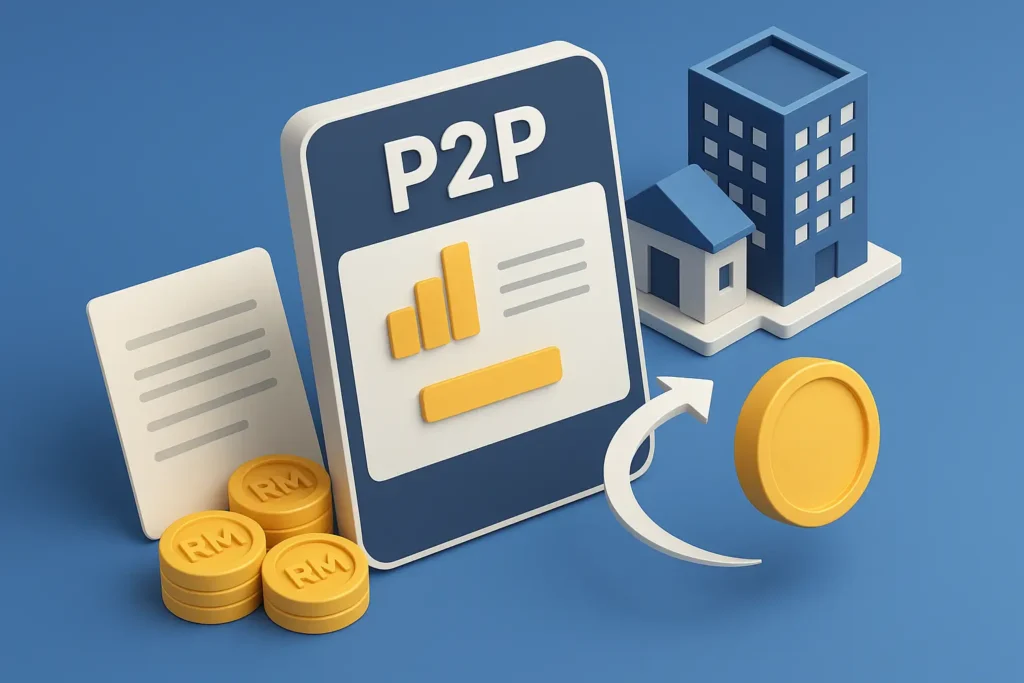
P2P financing allows you to fund short-term business loans to Malaysian SMEs.
The platform screens businesses, lists their financing needs, and investors like you choose which notes to fund.
Each loan (called a “note”) pays you interest, usually over 3–12 months.
You are not dealing with individuals. You are lending to registered businesses with financial documents, cashflow records, and credit assessments.
This is why many Malaysians describe P2P as “fixed deposit with higher returns,” although the risk profile is different.
Why It’s Legit in Malaysia
P2P financing in Malaysia is not a free-for-all.
It is tightly regulated under the Securities Commission Malaysia (SC) as part of the Recognised Market Operators (RMO) framework.
This means:
- Platforms must meet capital requirements
- They must publish data on defaults and performance
- They are audited and supervised
- They must conduct risk assessments and credit checks
- They must comply with SC guidelines updated in 2025
Only a handful of platforms are licensed:
- Funding Societies
- CapBay
- microLEAP
- B2B Finpal
As of 2024, Malaysians have funded over RM8.4 billion in SME financing through P2P and the number keeps growing each quarter.
This is no longer a niche product. It’s mainstream.
How Much You Can Realistically Earn
You will see platforms market “up to 18% returns”. Ignore the headline.
Look at actual investor portfolios.
Across real users and published platform data, typical net returns look like this:
| Platform | Typical Annual Return | Default Rate | Tenor |
|---|---|---|---|
| Funding Societies | 8–14% | 3–5% | 3–12 months |
| CapBay | 7–10% | 2–4% | 1–6 months |
| microLEAP | 10–16% | 4–6% | 3–9 months |
| B2B Finpal | 8–12% | 3–5% | 3–12 months |
Average beginner portfolio: 8–12%
Well-diversified, experienced investor: 10–14%
These returns are practical because:
- You receive repayments monthly
- You reinvest them into new notes
- Compounding pushes your annualised return higher
Compared to fixed deposits at around 2–3%, or underperforming condos at 2–4% yield, P2P is attractive for cashflow-focused investors.
The Real Risks (And How to Manage Them)
P2P is not risk-free. But the risks are manageable if you understand them.
A. Default Risk
A borrower may be late or fail to repay.
This is why diversification matters.
Mitigation:
- Never put more than RM100–RM200 into a single note
- Spread your capital across 20–100 notes
- Use invoice-backed or secured notes when possible
B. Cashflow Risk
You cannot withdraw early. Notes must mature.
Mitigation:
- Invest only from your “cashflow safe zone,” not emergency funds
- Choose shorter tenors (3–6 months) for faster recycling
C. Platform Risk
Only invest with SC-licensed operators.
Mitigation:
- Always confirm the platform is listed under RMO
- Avoid any P2P platform not supervised by SC
When managed correctly, risk becomes predictable and manageable , similar to diversified bond investing.
The Major Licensed Platforms in Malaysia
Here are the SC-approved platforms serious Malaysian investors use:
Funding Societies
- Largest platform in Asia
- Transparent reporting dashboard
- Auto-invest available
- Multiple note types (invoices, working capital, secured)
CapBay
- Focus on supply-chain financing
- Conservative, short tenors
- Institutional-grade credit assessment
microLEAP
- Offers conventional and Shariah-compliant notes
- Supports micro and SME borrowers
- Good for investors who want Islamic financing options
B2B Finpal
- Long-established P2P platform
- Reliable SME-focused notes
Each platform has strengths. Many seasoned investors use two or three simultaneously.
How to Start With RM1,000–RM10,000
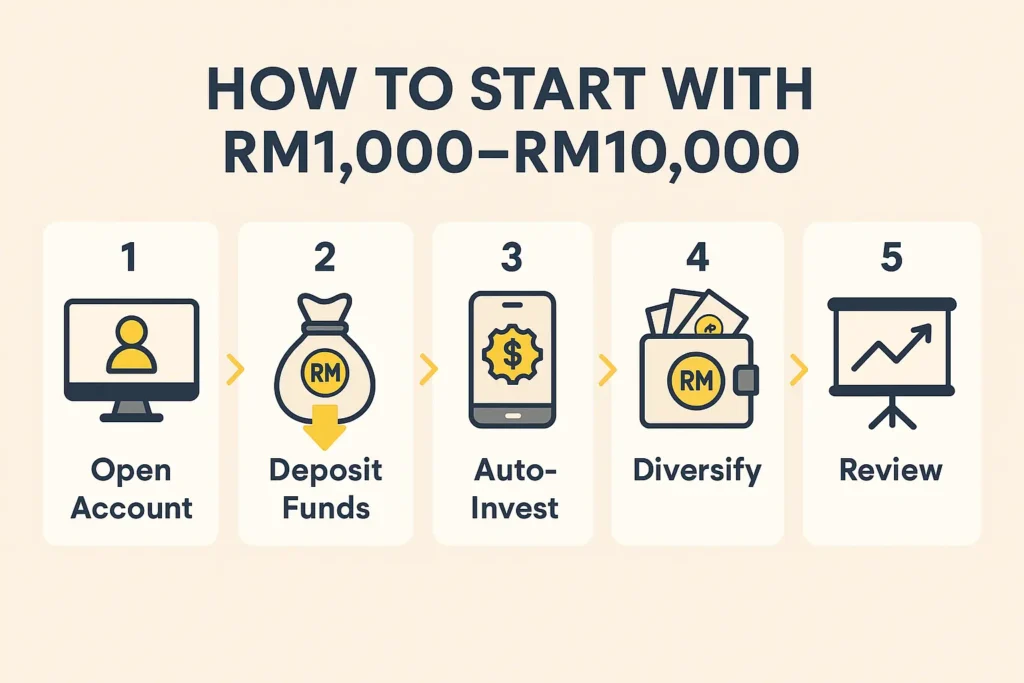
Step 1: Create an account with a licensed platform.
Complete e-KYC with NRIC and bank verification.
Step 2: Deposit an initial amount.
Start with RM500–RM1,000 to understand the process.
Step 3: Enable Auto-Invest.
Set filters for tenor, industry, minimum return, and credit grade.
Step 4: Diversify immediately.
Spread RM50–RM200 per note.
Your first milestone is 20–50 notes.
Step 5: Reinforce your portfolio.
Reinvest repayments monthly.
This is how you grow from 10% to 12% and higher.
Step 6: Review performance quarterly.
Adjust your filters depending on late payment trends.
The method is simple: many small notes, short cycles, fast recycling.
Taxes, Tenors, and Shariah-Compliant Options
Taxes
P2P returns are taxable as “other income”.
You only need to declare if your total annual income exceeds LHDN’s taxable threshold.
Shariah-Compliant Notes
Platforms like microLEAP and CapBay offer Islamic financing structures.
These avoid interest elements and follow risk-sharing principles.
Tenor Choices
Shorter notes (3–6 months)
- Lower risk
- Faster recycling
- Better for beginners
Longer notes (9–12 months)
- Higher returns
- Slightly higher risk
Who P2P Is Best For
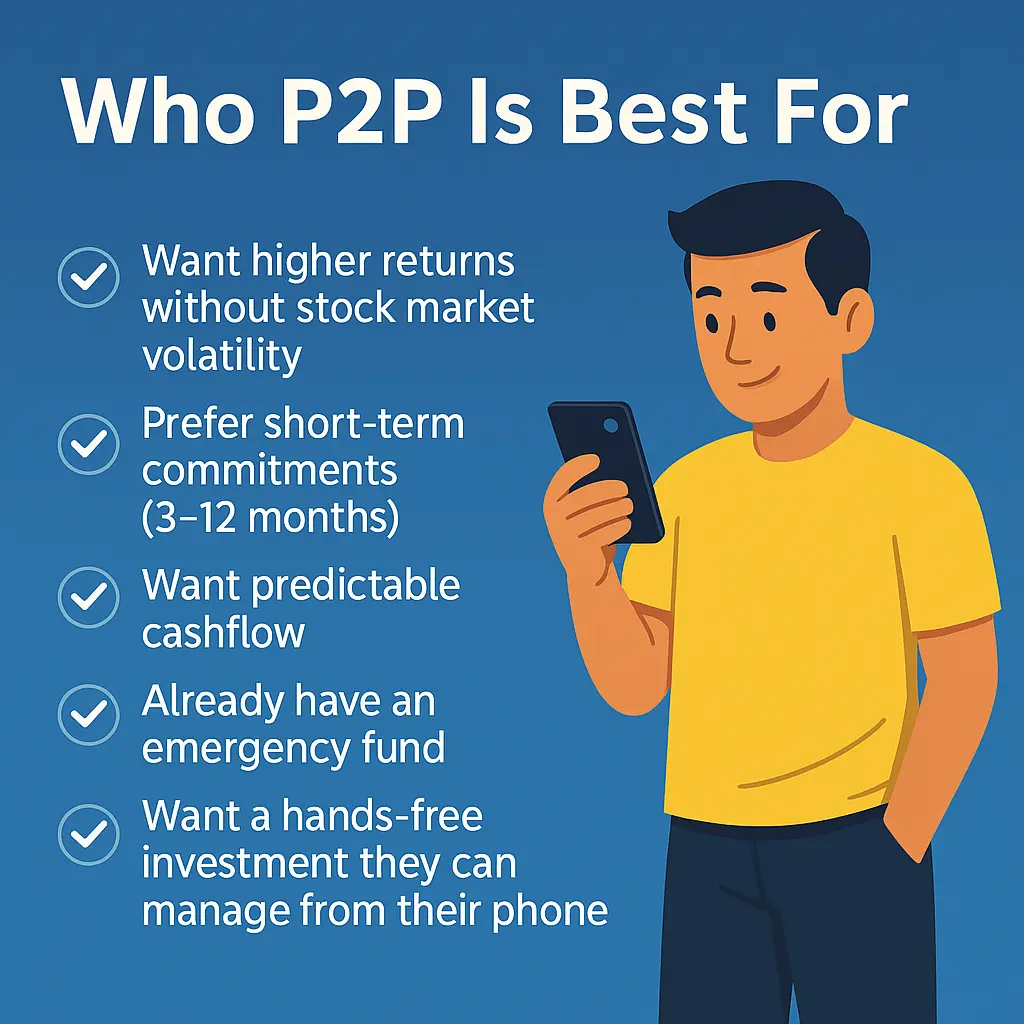
P2P financing is ideal for Malaysians who:
- Want higher returns without stock market volatility
- Prefer short-term commitments (3–12 months)
- Want predictable cashflow
- Already have an emergency fund
- Want a hands-free investment they can manage from their phone
It is not suitable if you need instant liquidity or have zero risk tolerance.
Final Thoughts
P2P financing is one of the few alternative investments in Malaysia that is both high-return and highly regulated.
It gives you access to an asset class previously limited to banks and large institutions.
Start small. Diversify intelligently. Reinvest consistently.
If you want to grow your money without waiting 30 years for a mortgage to pay off, this is one of the most practical places to start in 2025.
Keep Reading
If you’re working on building stronger cashflow and smarter money habits, these guides will help you take the next steps:
Best Cashback Credit Cards in Malaysia (2025)
https://ringgitwise.my/best-cashback-credit-cards-in-malaysia-2024/
A simple breakdown of the cards that actually give you real savings every month.
How to Stop Being Broke in Malaysia: 9 Brutal Truths You’re Avoiding
https://ringgitwise.my/how-to-stop-being-broke-in-malaysia-9-brutal-truths-youre-avoiding/
A direct, no-nonsense guide on why your money keeps disappearing and how to take control.
How to Negotiate a Raise in Malaysia (Even If You Hate Talking About Money)
https://ringgitwise.my/how-to-negotiate-a-raise-in-malaysia-even-if-you-hate-talking-about-money/
A practical, Malaysian-focused script to help you earn more without feeling awkward.



One thought on “Why P2P Financing Is the High-Return Investment Malaysians Miss”